


A surgical sculpting of the abdominal wall to create a firm, contoured midsection by removing excess skin and restoring weakened or separated muscles.
In contemporary body contouring, an abdominoplasty is not a weight-reduction method, but a multi-layered reconstructive repair of the anterior abdominal wall. The procedure directly addresses the stretched skin envelope, localized subcutaneous fat, and the deep musculoaponeurotic system.
By physically restoring the fascial midline (repairing diastasis recti), we reinforce structural stability across the entire abdominal core, achieving a flat, firm silhouette that diet and exercise alone cannot restore.
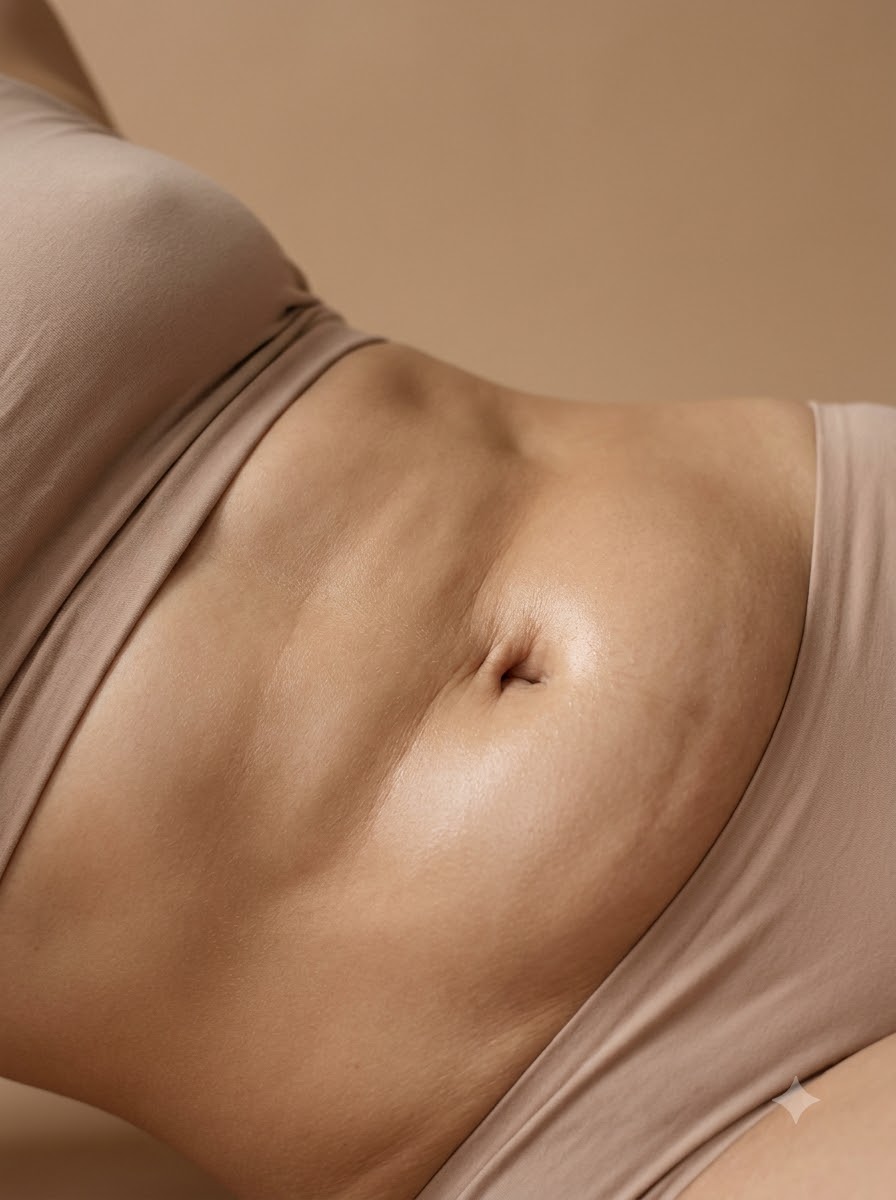
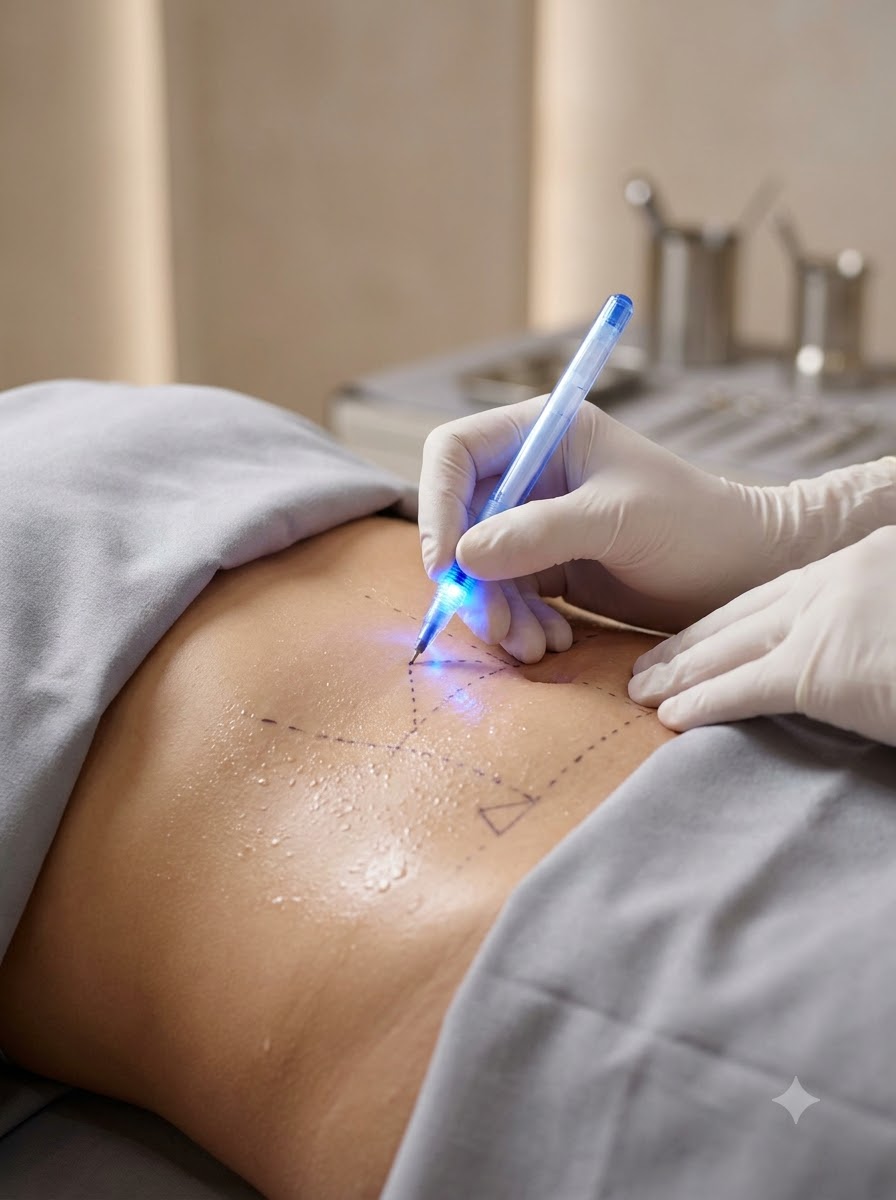
While a traditional abdominoplasty focuses primarily on skin excision and muscle repair, Dr. Gandhi frequently employs a synergistic approach known as Lipoabdominoplasty.
This advanced technique integrates high-definition liposuction to aggressively thin the abdominal flaps and aggressively sculpt the waistline and flanks prior to skin excision. This comprehensive, 360-degree approach delivers a deeply refined, three-dimensional contour rather than just a flat front profile.
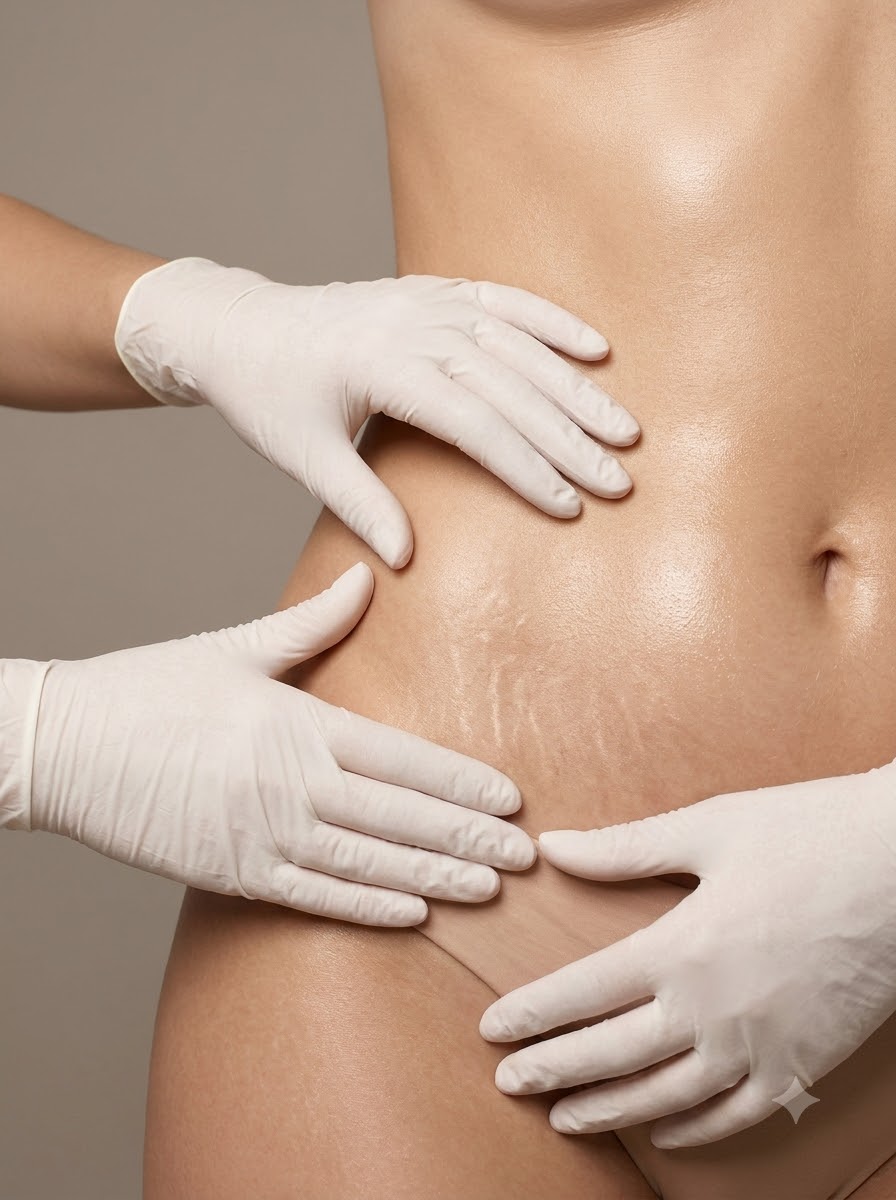

Contouring surgery involves meticulously adjusting skin tension, manipulating delicate tissues, and repositioning structural anchors. The technical skill and aesthetic eye of the operator are the most critical variables in your outcome.
Dr. Gandhi brings a globally refined perspective to body contouring, utilizing tissue-sparing, highly precise techniques. All procedures are performed exclusively in globally accredited environments, ensuring absolute patient safety and world-class monitoring while delivering a seamlessly natural, unoperated look.
"A tummy tuck is not a tool for weight loss, but rather the ultimate final step in a massive weight-loss or post-pregnancy journey. It is about restoring your anatomical baseline and giving you back structural comfort."
— Dr. Giriraj Gandhi
Utilizes a shorter incision and targets isolated tissue laxity confined strictly to the lower abdomen, below the navel. The umbilicus remains attached to its original underlying stalk, making this ideal for highly localized lower-abdominal stretching.
Addresses the entire structural layout from the pubic area up to the ribcage. It requires detailed myofascial plication across both upper and lower segments, and a structural reset of the navel to maintain perfect, natural proportions.
Designed for patients with significant weight loss, this approach extends the incision around the hips to address excess skin on the flanks and lower back, providing a more comprehensive lower-body lift.
You will experience tightness and soreness, similar to an intense core workout, rather than sharp pain. This is managed effectively with prescribed medication. Exparel, a long-acting local anesthetic, is often used during surgery to significantly minimize discomfort in the first 72 hours.
The incision is strategically placed as low as possible on the abdomen, typically sitting just above the pubic area. Dr. Gandhi meticulously plans the incision so that it remains entirely hidden beneath standard swimwear or undergarments.
While it is physically possible to carry a child safely after an abdominoplasty, it is highly recommended to wait until you are finished having children before undergoing the procedure, as future pregnancies will stretch the repaired muscles and skin, compromising your surgical results.
Cease all smoking and nicotine products, as they severely restrict blood flow and delay healing. Discontinue any blood-thinning medications, aspirin, and specific herbal supplements as directed during your pre-operative clearance.
Maintain a high-protein diet to prime your body for tissue repair. Finalize your post-operative recovery station at home, ensuring you have extra pillows to sleep in a flexed (reclined) position to reduce tension on the incision.
Do not eat or drink anything after midnight. Shower using the prescribed antibacterial soap provided by our clinic to ensure the surgical site is pristine.
The most intensive phase of healing. You will wear a customized compression garment continuously. Small surgical drains are typically placed to prevent fluid accumulation and are removed painlessly within 5 to 10 days. Mobility is limited to light walking with a slight forward bend to protect the internal muscle repair.
Energy levels return and physical tightness subsides. Desk work and light daily activities are permitted. You must continue wearing the compression garment to control swelling and support the newly contoured tissues.
Deep tissue swelling resolves fully. You are typically cleared for all strenuous activities and core workouts after the 6-to-8-week mark. The incision enters its final maturation phase, turning soft, flat, and pale over the next year.
A patient flew in from Dubai for her tummy tuck, booked ten days off work, and had a return flight ticketed for day twelve. By day five she messaged in a panic: her lower abdome...
6 Min ReadA patient sat across from me with two separate quotes from two clinics — one for a tummy tuck, one for liposuction of her flanks, scheduled four months apart "for safety." She a...
6 Min ReadA patient came to me three years after her second delivery, holding a printed workout plan from an online "diastasis safe" core program. She had done it faithfully for eight mon...
6 Min ReadSchedule a private consultation at our Nigdi clinic to explore your surgical options with absolute discretion and expert guidance.