


Advanced surgical and laser modalities designed to safely fade or remove vascular and pigmented birthmarks while preserving a refined skin finish.
Birthmarks may be vascular or pigmented, and treatment depends on lesion type, depth, and location.
Management may involve laser treatment for selective targeting or surgical excision for deeper or raised lesions where definitive removal and pathology are important.
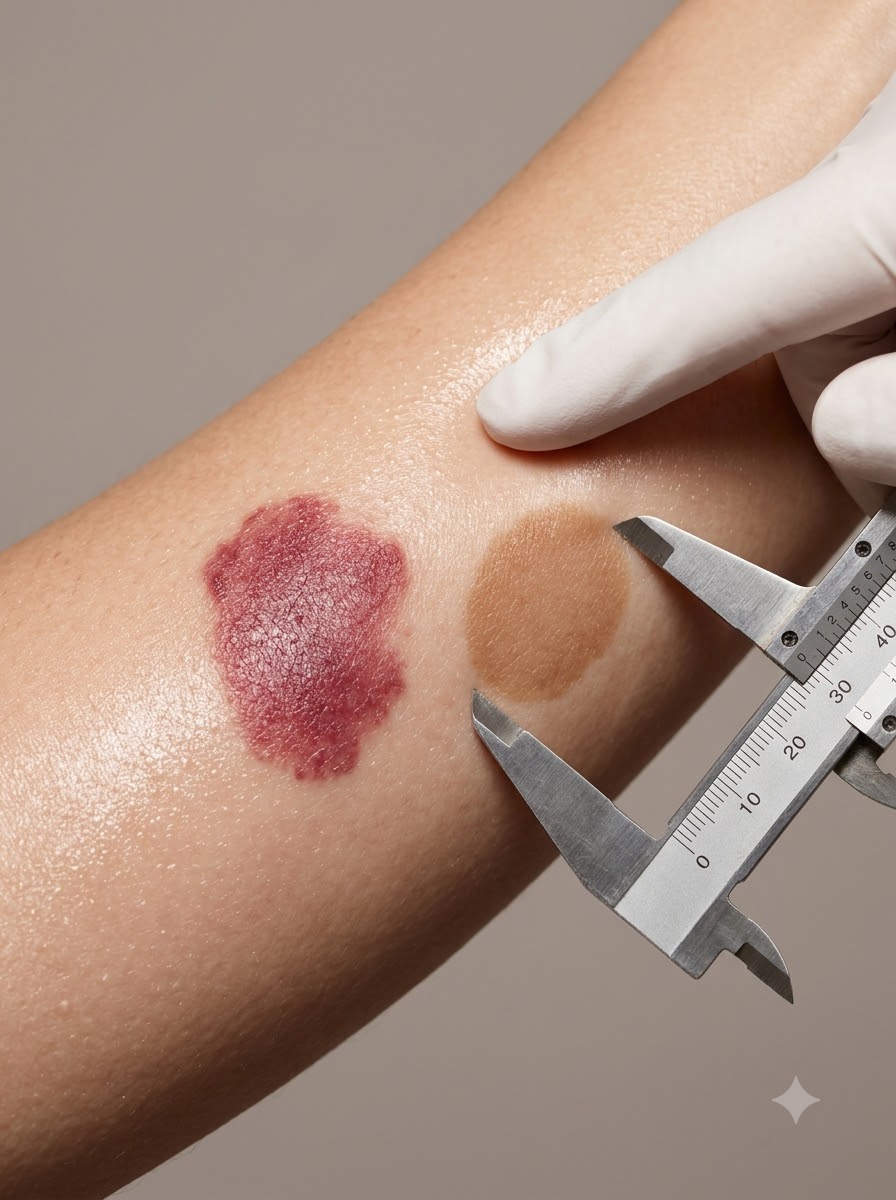
Lasers are ideal for selected superficial vascular and pigmented lesions.
Raised, cellular, or deep lesions may be better treated with excision, especially when definitive removal or pathology confirmation is needed.
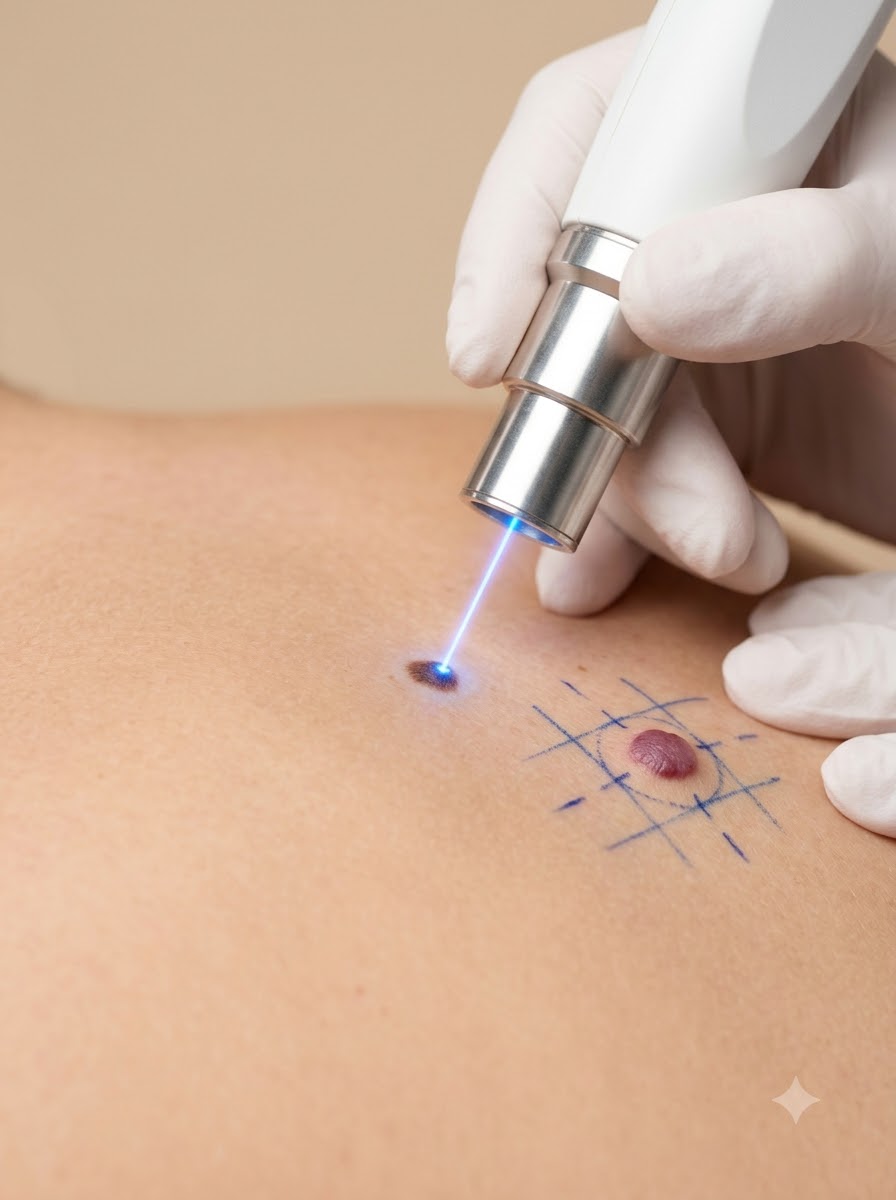

Not every birthmark should be treated the same way. Superficial vascular lesions may respond well to laser, while deeper pigmented or raised lesions often require surgical excision for complete control.
Our approach prioritizes correct diagnosis, aesthetic planning, and closure strategy so treatment matches lesion biology and healing quality remains high.
"The wrong technology on the wrong lesion creates avoidable scarring or recurrence. Proper classification comes first, treatment comes second."
— Clinical Director
Used for smaller raised lesions where complete removal and refined closure are priorities.
Staged removal strategy for larger lesions when single-stage closure would create excess tension.
Selective energy-based treatment for properly matched vascular or superficial pigmented birthmarks.
Local anesthesia or topical numbing keeps both surgical and laser treatments well tolerated.
Surgically excised lesions are generally definitive; some laser-treated vascular lesions may need maintenance over time.
Yes, pediatric evaluation is possible when lesion type, growth behavior, or psychosocial impact warrants intervention.
Avoid tanning before laser-based treatment to reduce pigment-related complications.
Blood-thinning medications and supplements may need temporary adjustment before surgery.
Clinical photos help guide planning and track treatment response.
Early aftercare depends on whether treatment was surgical or laser-based; mild soreness, redness, or swelling are expected.
Sutures, crusting, or pigment shedding are managed with wound care and strict no-picking instructions.
Persistent sun protection and scar care are critical for optimal blending and pigment stability.
Almost every parent who sits across from me with a child's birthmark, or an adult with one they've carried for decades, asks some version of the same question first: will the sc...
7 Min ReadA mother once brought in her six month old with a flat red patch across the cheek and forehead, convinced it needed "removal surgery" before school photos became an issue. In th...
7 Min ReadAlmost every parent who walks in with a child's birthmark, or an adult who has lived with one for decades, asks the same first question: "can this just be lasered off?" The hone...
7 Min ReadSchedule a private consultation at our Nigdi clinic to explore your surgical options with absolute discretion and expert guidance.