


A dual-purpose surgical refinement designed to alleviate physical burden while restoring a lifted, youthful, and perfectly proportionate aesthetic.
Breast reduction is a highly transformative procedure that addresses macromastia (abnormally large breasts). For many women, disproportionately heavy breasts cause chronic physical discomfort, postural issues, and severe restrictions on an active lifestyle.
This architectural intervention precisely excises excess glandular tissue, localized fat, and stretched skin. Simultaneously, the remaining tissue is reshaped and elevated into a firm, higher position on the chest wall, delivering immediate physical relief and a beautifully balanced, natural silhouette.

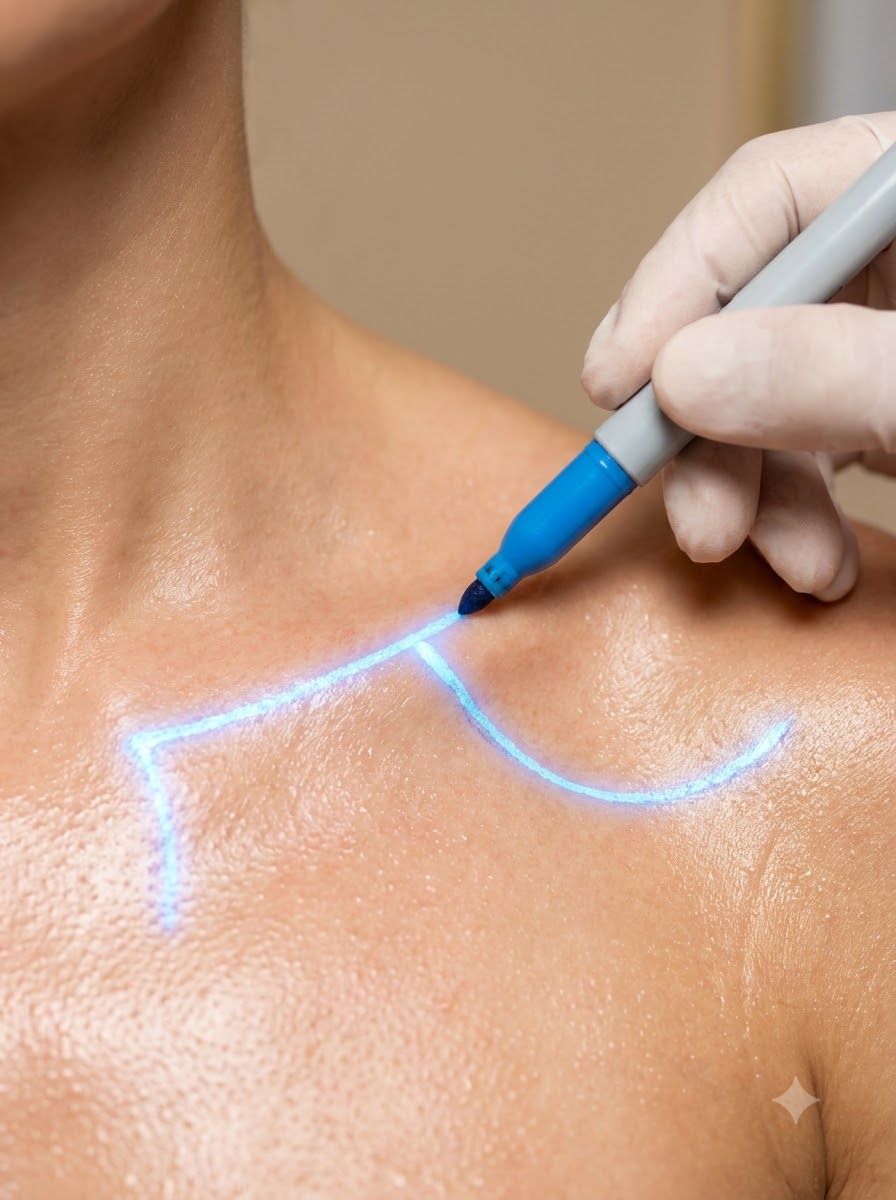
In highly specific cases where breast enlargement is primarily composed of fatty tissue rather than dense glandular tissue, and the skin possesses excellent elasticity, a 'scarless' reduction using targeted liposuction may be an option.
However, for the vast majority of women suffering from symptomatic macromastia, the breast is heavy with fibrous glandular tissue and inelastic skin. In these cases, precise surgical excision is the only definitive way to remove the dense weight, lift the breast mound, and resize the areola for total aesthetic harmony.


True mastery in breast reduction lies not just in removing tissue, but in the structural engineering of what remains. Dr. Gandhi utilizes advanced pedicle-sparing techniques to ensure the absolute preservation of blood supply and nerve sensation to the nipple-areolar complex.
Furthermore, he incorporates an 'internal bra' suturing technique. By anchoring the lower breast tissue to the deep pectoral fascia, he creates a robust internal support system that defies gravity, preventing the breast from 'bottoming out' and maintaining a high, youthful profile for years to come.
"Across the entire spectrum of plastic surgery, breast reduction consistently yields the highest rate of patient satisfaction. It is a profound shift—patients wake up from anesthesia and instantly feel a literal weight lifted off their chest, breathing easier and standing taller."
— Dr. Giriraj Gandhi
Ideal for moderate reductions and significant lifting. The incision circles the areola and extends vertically down to the breast crease. It provides excellent reshaping capabilities while avoiding a scar beneath the breast fold.
The gold standard for significant reductions and severe drooping. It involves an incision around the areola, vertically down, and horizontally along the breast crease. This allows for maximum tissue removal and structural reshaping.
Included in almost all reductions. As breasts enlarge, the areola stretches. Dr. Gandhi meticulously resizes the areola to match the new, smaller breast proportions, moving it to a higher, more youthful apex on the breast mound.
If your heavy breasts are causing documented medical issues (like chronic back pain or skin rashes) that have not responded to conservative treatments (like physical therapy), insurance may cover a portion of the procedure. Our administrative team will help guide you through the clinical documentation process.
Dr. Gandhi utilizes advanced nerve-sparing techniques to preserve sensation. While temporary numbness is very common during the initial healing phase, permanent loss of sensation is rare, though the risk slightly increases with very massive reductions.
Because a portion of the glandular tissue and milk ducts are removed, breastfeeding capabilities can be impacted. If future nursing is a priority, you must discuss this during your consultation so Dr. Gandhi can tailor the technique to maximize the preservation of milk ducts.
Given the density of breast tissue, a baseline mammogram is typically required prior to surgery to ensure absolute breast health. We will also coordinate standard pre-operative blood work.
This is non-negotiable. You must stop all nicotine use at least six weeks prior. Breast reduction relies on complex micro-circulation to keep the newly repositioned nipple alive and healthy; nicotine severely compromises this blood flow.
Purchase specialized, front-closing surgical bras as directed by our clinic. Prepare your bed with extra pillows to sleep at an incline, which will drastically reduce early post-operative swelling.
You will wear a soft surgical bra day and night. Small surgical drains may be present and are typically removed within a few days. You will experience tightness and mild soreness, but most patients report immediate relief from back and neck pain.
Most patients return to desk work and normal daily activities. You must continue to avoid all heavy lifting, pushing, pulling, or overhead reaching to protect the delicate internal sutures supporting your new breast shape.
The breasts will completely settle into their final, natural teardrop shape. You are cleared for all high-impact activities. Incisions will be fully closed and will begin the process of fading into soft, pale lines over the next year.
The mother sat forward in her chair before her daughter had even finished sitting down. "We've seen two other surgeons," she said. "One said seventeen is too young, full stop. T...
7 Min ReadThe breast is not one uniform tissue block — it's glandular volume suspended from the chest wall by Cooper's ligaments, wrapped in a skin envelope, and fed by a blood supply tha...
7 Min ReadShe placed her phone on the desk with three photos open in three tabs — a lollipop scar, a full anchor, and a "scarless" claim she was openly suspicious of. "I've had three cons...
6 Min ReadSchedule a private consultation at our Nigdi clinic to explore your surgical options with absolute discretion and expert guidance.