


Micro-surgical repair of torn or stretched earlobes to restore smooth, natural contour and support future piercing.
Earlobes can split or stretch from heavy jewelry, trauma, or gauge use.
Repair reshapes and reapproximates tissue margins under local anesthesia for natural contour restoration.
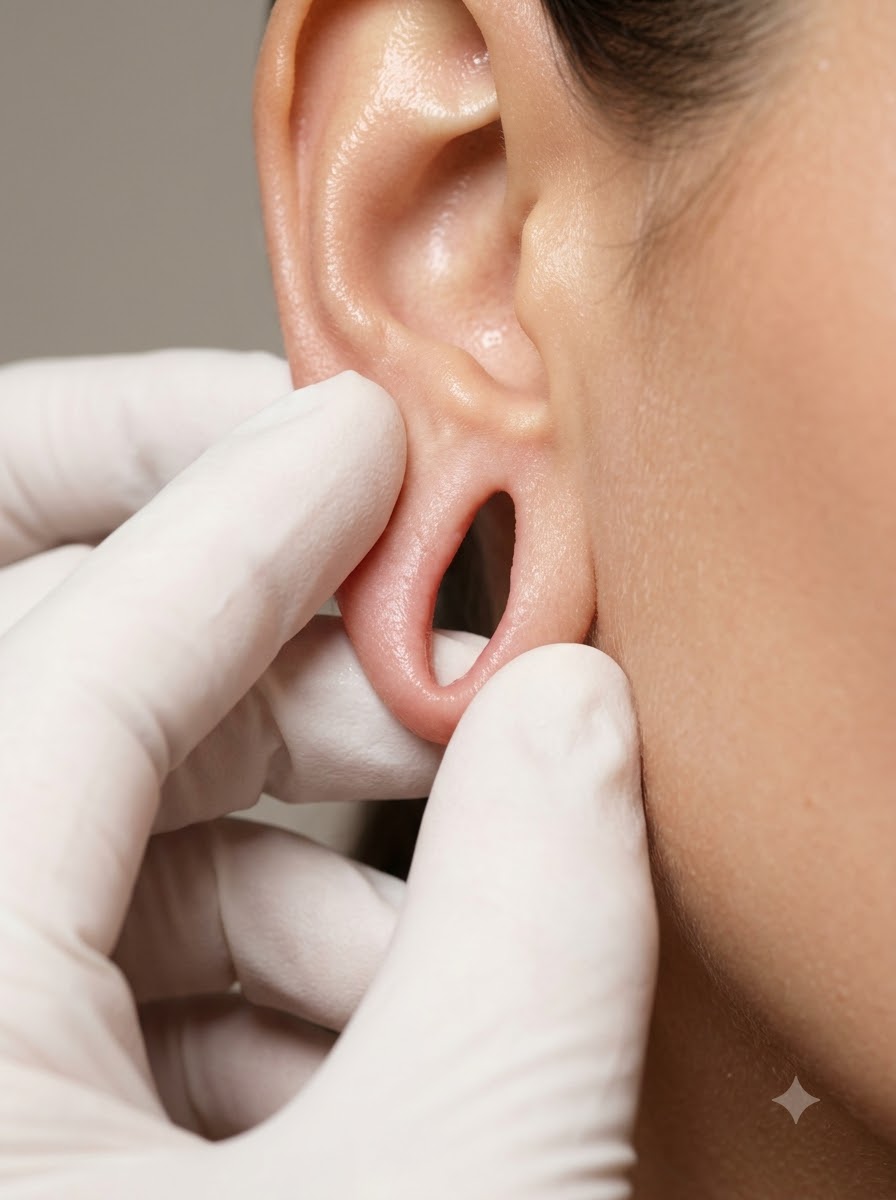
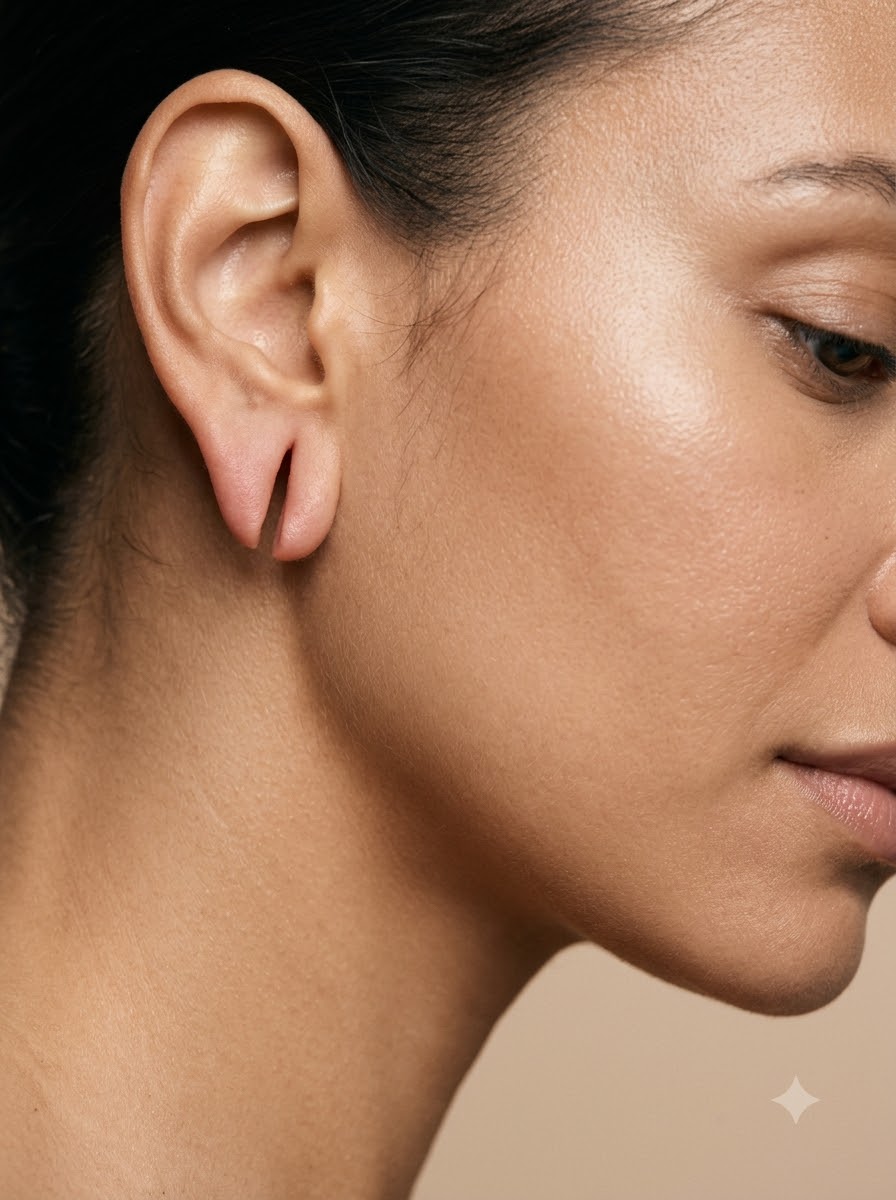
Deflated but intact earlobes may benefit from small-volume filler.
Structural tears or major elongation require surgical correction for durable restoration.
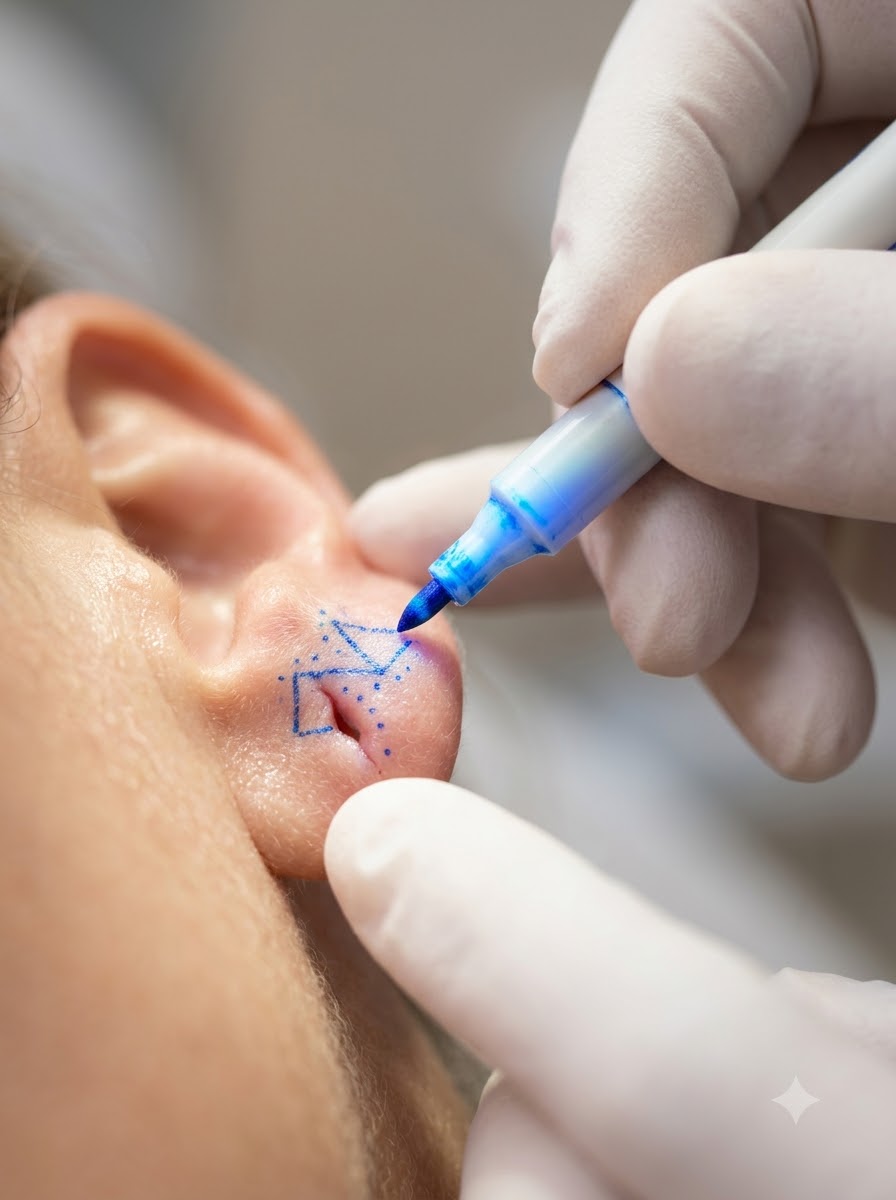

Straight-line closure alone can produce rim notching.
Our reconstructive patterns and tension distribution techniques are designed to preserve a smooth lobule border and long-term support.
"Even subtle piercing elongation can change how jewelry presents; precise tightening can restore ideal stud orientation."
— Clinical Director
Excision of elongated tract with fine closure to re-establish lobe continuity.
Margin refresh and contour-preserving closure to avoid notch deformity.
Tissue flap strategies to rebuild normal lobe contour from stretched tissue.
Procedure discomfort is minimal under local anesthesia.
Usually after full tissue strength returns, commonly around 6 to 8 weeks.
Fine sutures are visible briefly during healing and removed or dissolved per technique used.
Remove earrings before procedure to reduce irritation and allow planning.
Keep hair secured away from the surgical field.
Temporarily avoid blood-thinning agents when medically appropriate.
Protective dressing and pressure avoidance during sleep.
Daily gentle cleansing and ointment support for incision care.
Scar maturation continues; re-piercing planned after full healing.
The surgery itself is almost an afterthought. Fifteen to twenty minutes under local anaesthesia, a few sutures, and the patient is walking out the same day wondering why they wa...
6 Min ReadWhen a patient calls it a "torn earlobe," I've learned not to assume which of three fairly different problems they actually have. The earlobe repair technique India surgeons use...
6 Min ReadBy the time most people call about ear lobe repair surgery India, they have already lived with the problem for months — wearing smaller earrings, avoiding certain necklines, hop...
6 Min ReadSchedule a private consultation at our Nigdi clinic to explore your surgical options with absolute discretion and expert guidance.