


A swift, permanent intervention to relieve pain, control infection risk, and prevent recurrence.
Ingrown toenails occur when nail edges penetrate surrounding skin, causing pain, inflammation, and infection cycles.
Definitive correction removes the offending nail edge and treats the corresponding matrix segment to reduce recurrence risk.
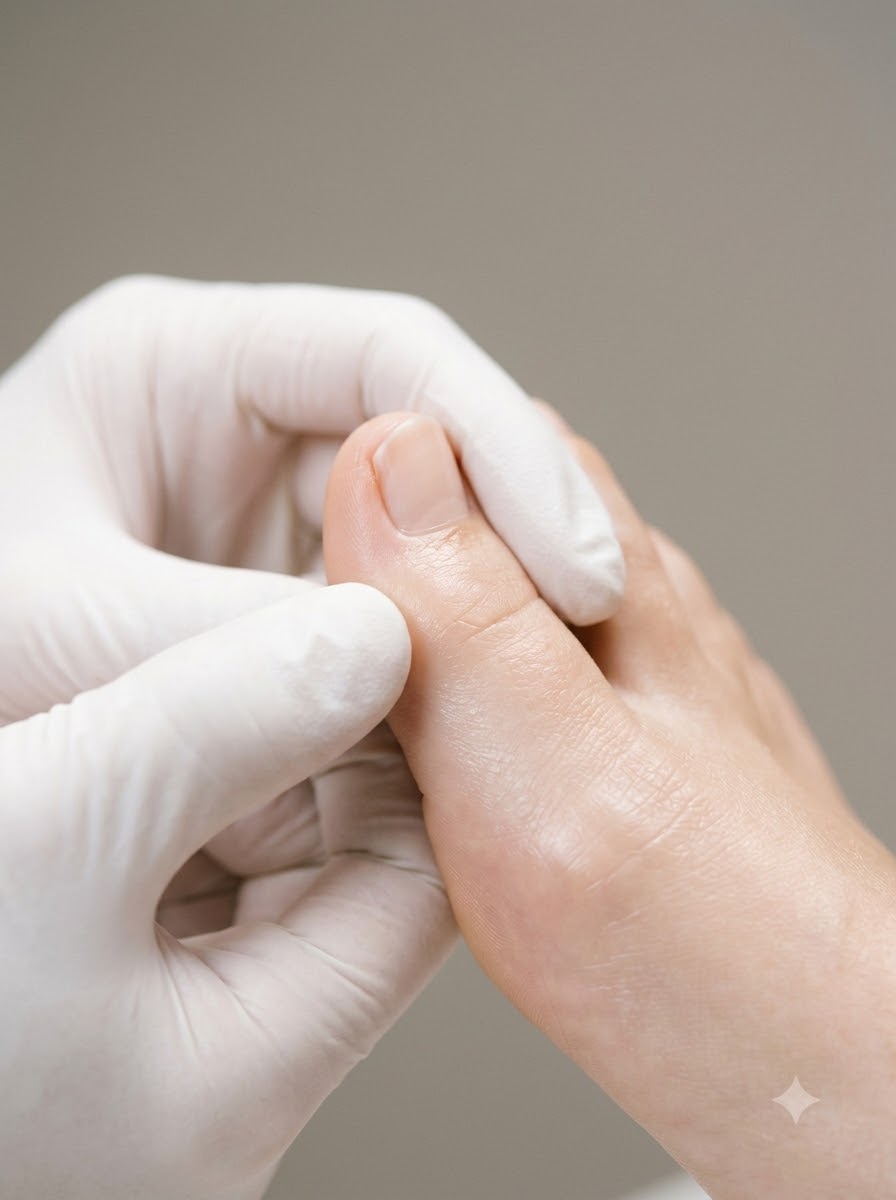
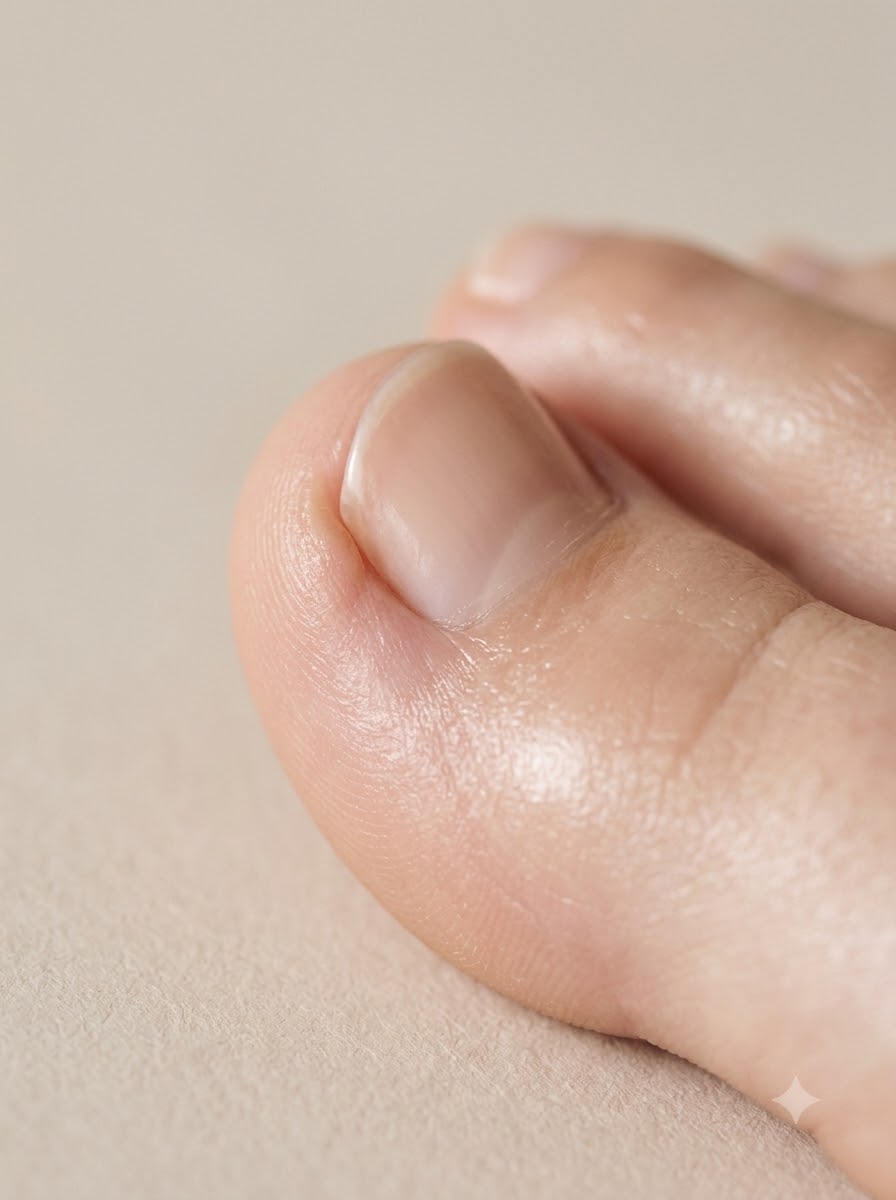
Antibiotics can calm secondary infection.
They do not remove the mechanical nail-edge cause, so definitive correction is usually required for lasting relief.
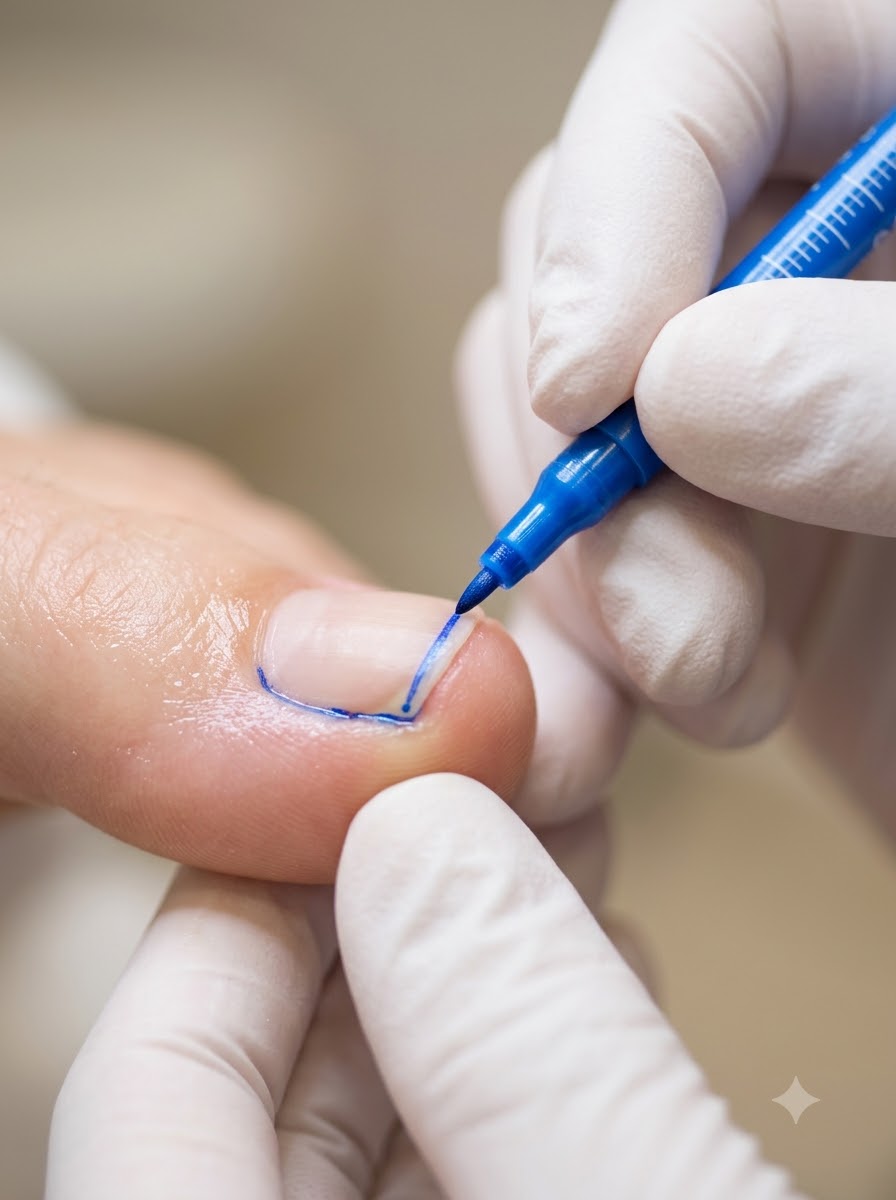

Recurrence is often linked to incomplete matrix treatment.
Our protocol uses targeted partial avulsion with matrix management to preserve nail appearance while preventing repeat ingrowth.
"Chronic recurrence usually means the root segment was never fully addressed."
— Clinical Director
Local anesthesia provides complete procedural comfort.
Only the offending nail edge is removed to preserve nail aesthetics.
Targeted matrix control helps prevent regrowth of the problematic edge.
Yes. Most patients are ambulatory immediately with activity modification.
The corrected nail usually appears slightly narrower at the treated border, with overall preserved appearance.
Typically 1 to 2 weeks depending on healing and footwear pressure.
Bring open footwear for post-procedure comfort.
Clean feet and remove nail coatings before treatment.
If active infection is significant, pre-procedure control may be needed before definitive surgery.
Elevate foot and keep dressing dry.
Daily soak and wound care support clean healing.
Site settles and normal activity resumes as tenderness resolves.
The germinal matrix is the strip of tissue tucked under the skin fold at the base of the nail, and it is the reason ingrown toenails keep coming back no matter how many times th...
7 Min ReadA patient walked into the clinic recently with his shoe already off before he sat down that is usually the first sign someone has been living with a nail edge digging into flesh...
6 Min ReadIf you have already had one ingrown toenail removed and it grew back, you already know the real question is not "should I get this operated" but "which nail avulsion technique a...
7 Min ReadSchedule a private consultation at our Nigdi clinic to explore your surgical options with absolute discretion and expert guidance.