


Permanent surgical removal of benign fatty tumors with complete capsule extraction and refined closure.
Lipomas are benign fatty masses beneath the skin that can cause visible contour change and discomfort.
Definitive treatment is complete excision of the lesion and capsule to minimize recurrence risk.
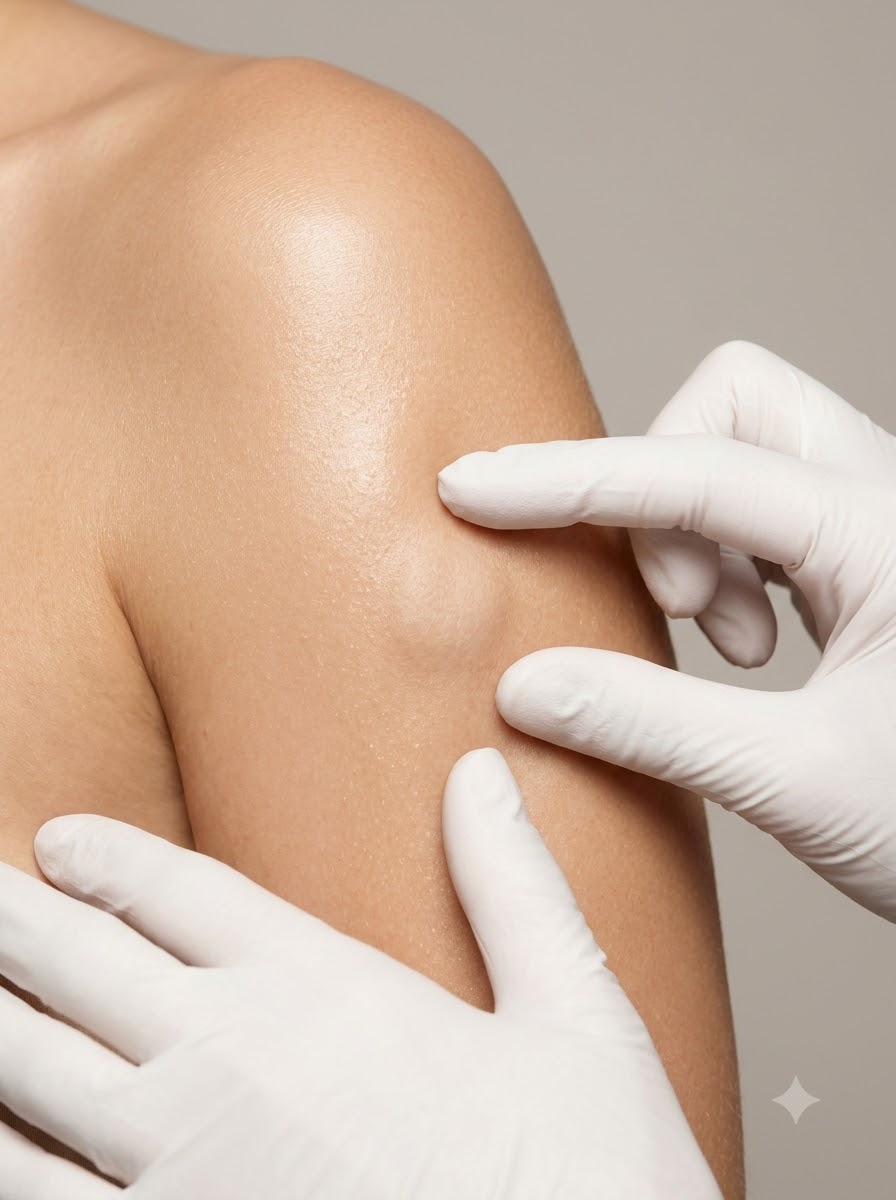
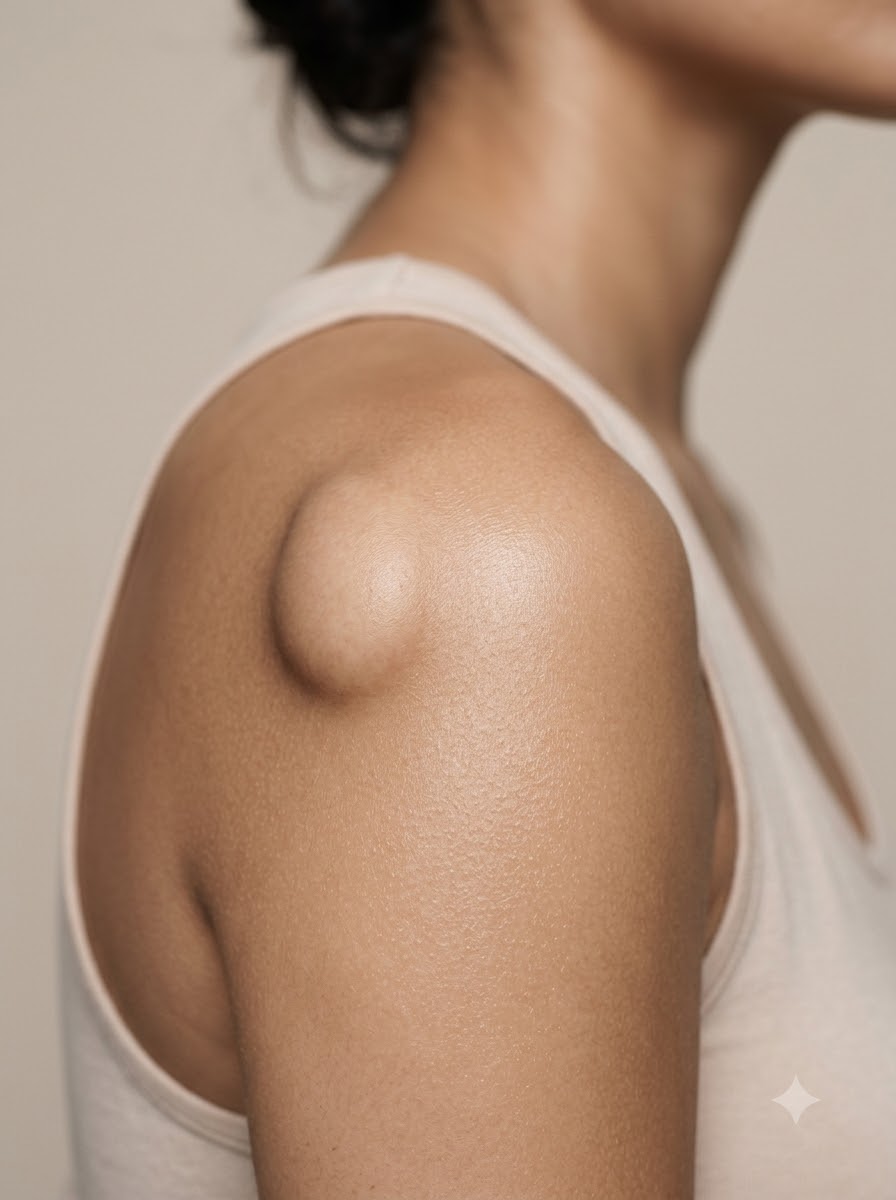
Liposuction can reduce volume with tiny access points in select cases.
Complete surgical excision remains preferred when recurrence prevention and full pathology assessment are priorities.
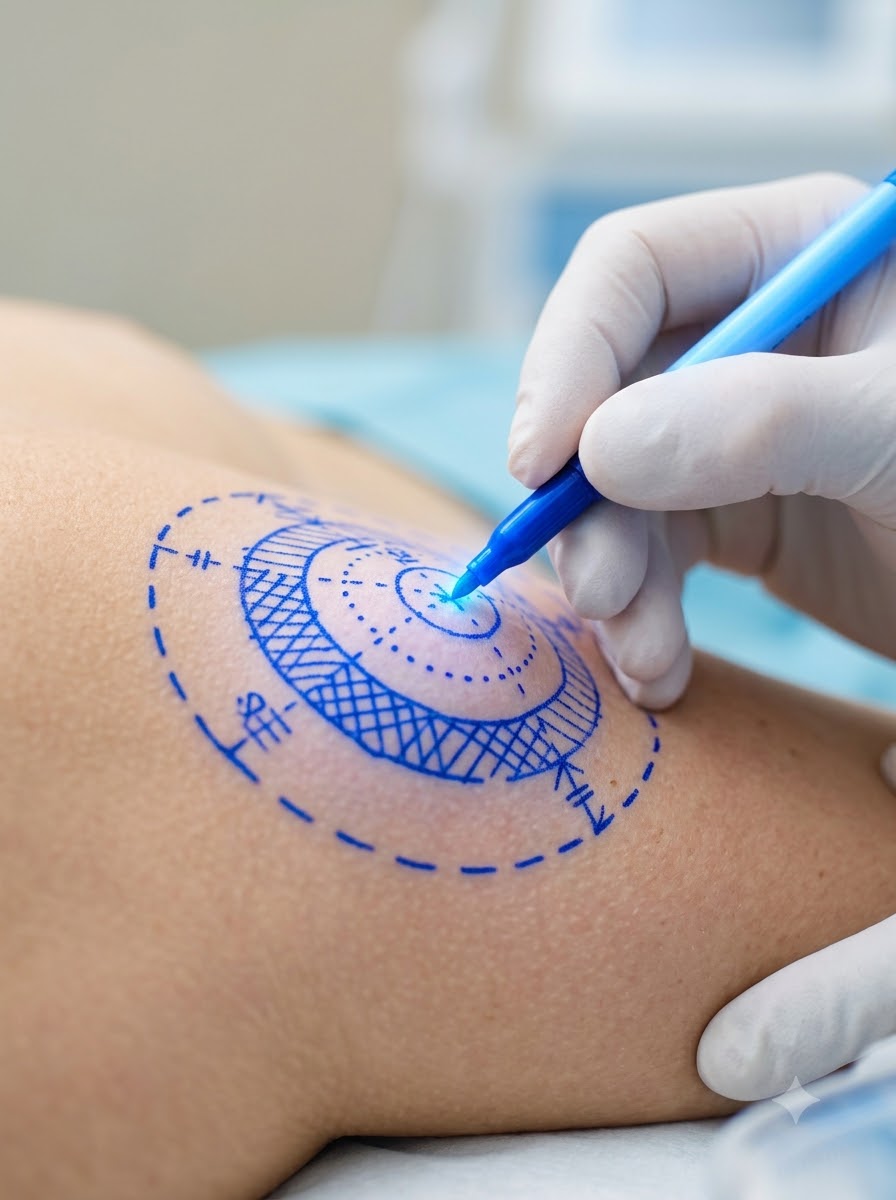

Recurrence often occurs when capsule remnants remain.
Our approach prioritizes intact capsule dissection, dead-space management, and layered closure for contour and scar quality.
"Lipomas do not reliably shrink with weight loss; structural removal is the definitive option."
— Clinical Director
Provides analgesia, hemostasis support, and clearer tissue planes for dissection.
Lesion and capsule removed as a single unit whenever possible.
Layered deep closure reduces seroma risk and supports smooth contour healing.
Most superficial lipoma excisions are completed in under an hour under local anesthesia.
Yes, excised tissue is typically sent for confirmation.
A linear scar is expected, usually optimized by incision placement and layered closure.
Large or deep lesions may require ultrasound/MRI planning.
Temporary adjustment of blood-thinning agents may be advised.
Wear loose clothing that avoids friction at the surgical site.
Pressure dressing and activity reduction help prevent fluid accumulation.
Progressive return to routine with wound care and follow-up suture management.
Tissue settles and scar maturation begins.
Most patients who come in for a lipoma removal have already decided the lump has to go. What they haven't decided is whether the surgeon in front of them is going to leave a sca...
7 Min ReadA 42 year old schoolteacher came in three weeks after having a lipoma removed from her upper back at another clinic. She wasn't worried about the scar — she was worried because...
6 Min ReadMost people who feel a new lump under their skin do not want a lecture on fat cells. They want to know one thing: is this dangerous, and does it need to come out. In my clinic,...
6 Min ReadSchedule a private consultation at our Nigdi clinic to explore your surgical options with absolute discretion and expert guidance.